

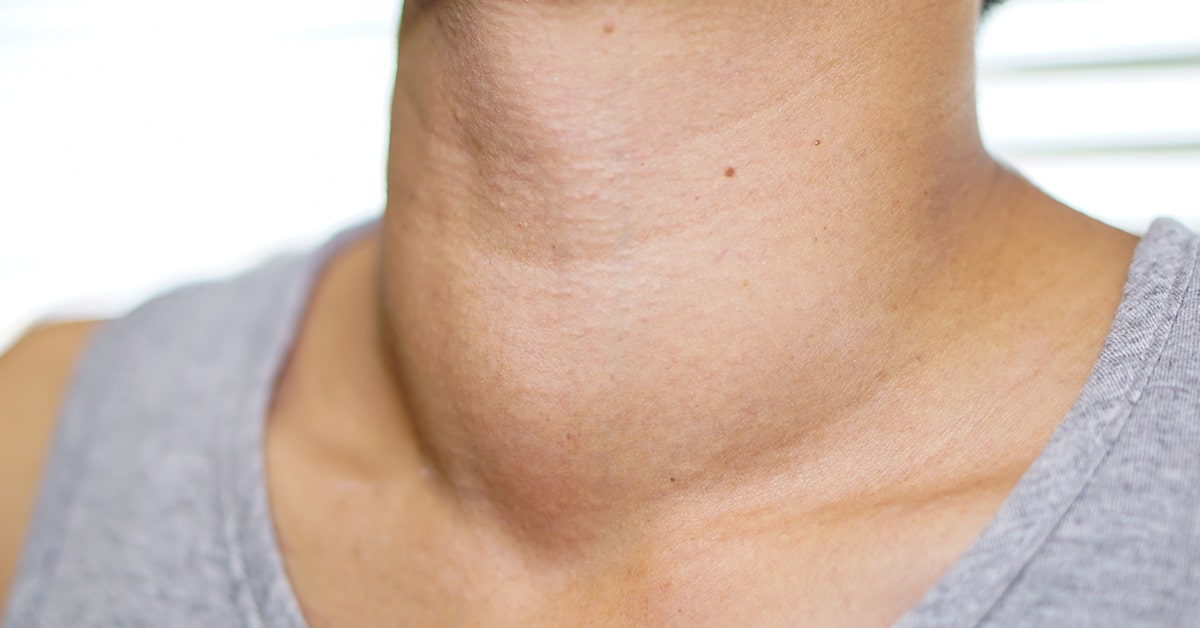
The thyroid is one of the most important endocrine glands. It is located in front of the trachea, below the “Adam’s apple,” and is butterfly-shaped. It consists of two lobes connected by a thin bridge of tissue called the isthmus.
The primary function of the thyroid gland is the production, storage, and release of thyroid hormones into the bloodstream. These hormones are:
- Thyroxine (T4)
- Triiodothyronine (T3)
- Calcitonin (CT)
These hormones are essential for the proper functioning of the body and affect almost every tissue in the body. More specifically:
- They regulate metabolism.
- They affect fetal development during pregnancy.
- They help regulate bodily functions, such as temperature, reproductive function, etc.
- They play an important role in the regulation of blood lipids and glucose, as well as in the proper functioning of the cardiovascular, muscular, and nervous systems.
Thyroid function is controlled by the pituitary gland via TSH (thyroid-stimulating hormone), which signals the production of more or fewer hormones depending on the body’s needs.
Thyroid gland disorders
Hyperthyroidism and hypothyroidism
In hyperthyroidism, the thyroid gland produces more hormones than the body needs. This can be due to various causes, such as Graves’ disease, a thyroid adenoma, etc. The symptoms with which it manifests are:
- tachycardia
- insomnia
- weight loss
- intense anxiety
- irritability
- hand tremors
- increased appetite
In hypothyroidism, the thyroid gland does not produce enough hormones. This can be due to an autoimmune disorder such as Hashimoto’s thyroiditis. Patients with hypothyroidism may experience
- feeling of fatigue
- increased weight
- constipation
- depression and
- subfertility
- reduced cold tolerance
- memory problems
- hair loss
Goiter – Nodules
Goiters are divided into two categories:
- Diffuse Goiter: Refers to a uniform enlargement of the thyroid gland, often without affecting its function.
- Nodular Goiter: It manifests as solitary nodules within the thyroid, which may be either benign or malignant.
Thyroid cancer
Thyroid cancer is not a particularly rare form of the disease. However, thanks to the high accuracy of imaging tests, diagnosis often occurs at the microcarcinoma stage, which contributes to an excellent treatment outcome. It is usually asymptomatic; nevertheless, potentially suspicious signs include shortness of breath, hoarseness, difficulty swallowing, and the presence of a hard, palpable nodule.
Thyroiditis
These are inflammatory disorders of the thyroid with varying etiopathogenesis. They include chronic Hashimoto’s thyroiditis, acute thyroiditis, drug-induced thyroiditis, and postpartum thyroiditis. Associated symptoms include dysphagia, glandular enlargement, malaise, and muscle pain.
Diagnosis is established through a clinical examination by an endocrinologist. Concurrently, blood tests are performed to assess thyroid hormone levels, along with an ultrasound scan. If a nodule is detected, a thyroid scan is usually performed, while fine-needle aspiration (FNA) is recommended when further evaluation of a suspicious nodule is required.