

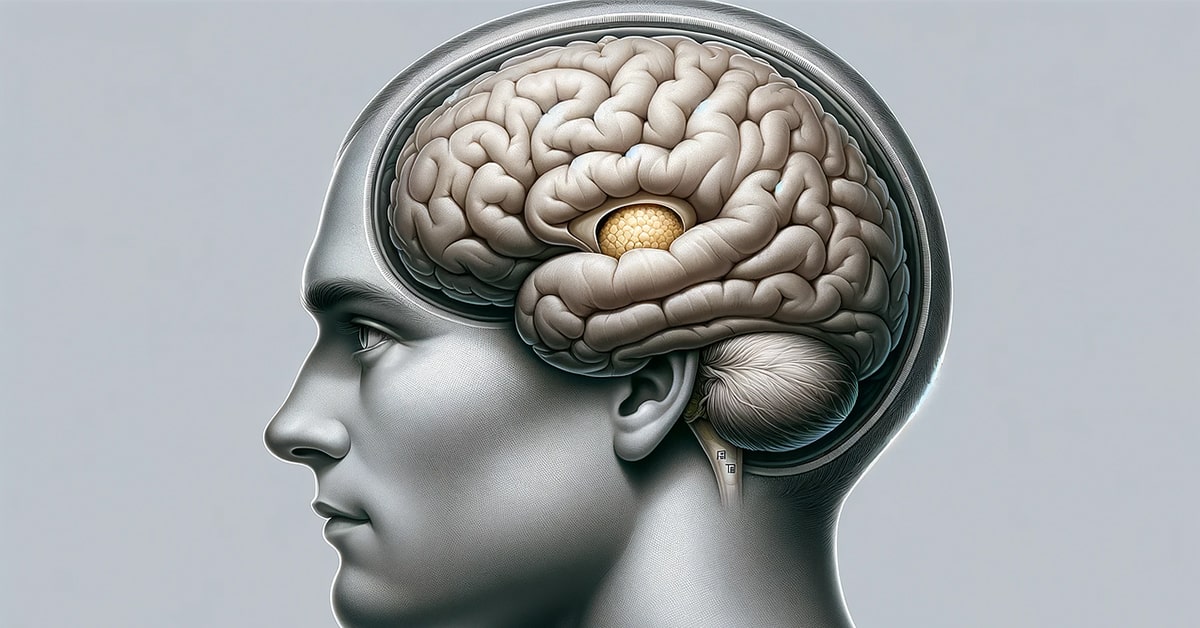
The pituitary gland is an important gland. It is the size of a bean and is located at the base of the brain, between the ears and behind the nose. It is divided into two parts: the adenohypophysis (anterior lobe) and the neurohypophysis (posterior lobe). Although small in size, the pituitary gland plays a crucial role in regulating many bodily functions through the production of hormones, such as growth, blood pressure, menstruation, and fertility.
The anterior pituitary produces a variety of hormones:
- Thyroid-stimulating hormone (TSH)
- Follicle-stimulating hormone (FSH)
- Luteinizing hormone (LH)
- Adrenocorticotropic hormone (ACTH)
- Prolactin
- Growth hormone or somatotropin
- Melanocyte-stimulating hormone (MSH)
The neurohypophysis produces antidiuretic hormone (ADH).
The most common pituitary disorders are pituitary insufficiency and pituitary adenomas. However, these are rare conditions.
What causes pituitary insufficiency?
Pituitary insufficiency is the term used to describe underactivity of the pituitary gland, resulting in reduced secretion of one or more hormones. It is usually caused by compression of the gland by adenomas. Adenomas are benign tumors that impair pituitary function due to the pressure they exert on the gland. They are often hormonally active, producing an excess of one of the pituitary hormones. Pituitary insufficiency can also be caused by inflammation of the pituitary, hemochromatosis, pituitary hemorrhage or infarction, and—rarely—pituitary cancer.
What is the cause of pituitary adenomas?
The cause of the abnormal growth of pituitary cells and the formation of adenomas is unknown. Genetic mutations appear to play a role, particularly when adenomas occur in multiple family members. Certain syndromes have also been implicated.
What are the symptoms of pituitary gland disorders?
Symptoms
of pituitary disorders vary depending on which hormone is not being secreted in sufficient quantities. Essentially, they reflect functional dysregulation and a hormone deficiency in the glands controlled by the pituitary. For instance, an isolated deficiency of thyroid-stimulating hormone (TSH) manifests as symptoms of hypothyroidism. Symptoms of pituitary adenomas (when they do not produce hormones) are slow to appear, and in many cases, the patient remains asymptomatic for years. Depending on the size of the adenoma, symptoms may include headaches or vision problems. When the adenoma is active, symptoms manifest earlier.
What is the appropriate treatment for pituitary disorders?
Treatment varies depending on the case. When addressing pituitary insufficiency, the goal is to replace the hormones that are not being produced. For example, in cases of isolated thyroid-stimulating hormone (TSH) deficiency, thyroxine is administered.
If we wish to treat pituitary adenomas, the therapy may involve surgical removal, medication, radiation, or a combination thereof.
It should be emphasized that the treatment is always administered by a specialized endocrinologist, who also undertakes the patient’s monitoring.